


« older | Main Largehearted Boy Page | newer »
June 21, 2021
David Leo Rice's Playlist for His Story Collection "Drifter"
In the Book Notes series, authors create and discuss a music playlist that relates in some way to their recently published book.
Previous contributors include Jesmyn Ward, Lauren Groff, Bret Easton Ellis, Celeste Ng, T.C. Boyle, Dana Spiotta, Amy Bloom, Aimee Bender, Roxane Gay, and many others.
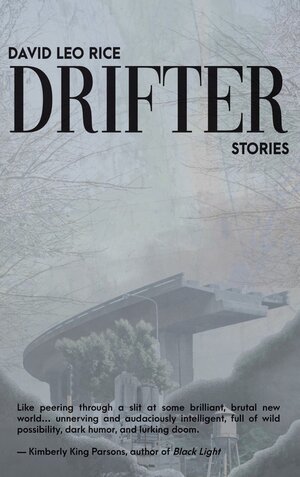
David Leo Rice's story collection Drifter is marvelously dark and thought-provoking.
Vol. 1 Brooklyn wrote of the book:
"Rice’s fiction touches on the strange, phantasmagorical, and horrific, but juxtaposes those elements with headier explorations of narratives and the self; it’s like little else out there."
In his words, here is David Leo Rice's Book Notes music playlist for his story collection Drifter:
For this playlist, I chose one song for each story in my debut collection, Drifter: Stories. Given that the book, which developed over the past decade, deals with drift across both physical and psychic geographies, and features characters crossing boundaries between waking and dreaming, and life and death, as they roam through crumbling towns, seedy ports, and sinister roadside attractions, I chose songs that remind me of cusp points in my own life, times when I was no longer quite who I used to be, and not yet who I’d eventually become. Looking back on them together like this, I can see that the stories developed out of these exact cusp moments, as an effort to interrogate where I was at, and where I wanted to go (or feared I might be going).
The three parts below follow the three parts of the book, which trace the journey of a drifter spirit, embodied by many characters and perhaps ultimately by the reader, from an estranged home, to a zone of total otherness, and, finally, back to something like home, even if true return is never possible.
Part I: Here
The Brothers Squimbop: Me & The Devil Blues by Robert Johnson
The collection kicks off with the first of two stories featuring the Brothers Squimbop, a pair of existentially displaced charlatans (who turn up, sundered or merged, as Professor Squimbop, in my 2019 novel Angel House). They roam the world enacting various schemes, sometimes to comic and sometimes to horrific effect. In this story, they find themselves in the 2070s, which, they decide, maps perfectly onto the 1930s, because Y2K was a sort of reversion point, causing every year thereafter to move backward in time. They love nothing more than to peel out of towns after causing a flamboyant disaster, blaring Robert Johnson’s classic Me & The Devil Blues from 1937, one of American music’s most potent documents of primal dread and inevitable doom, running from that which can never be outrun.
Egon's Parents: Gnostic Device by Holy Sons
This story features a teenager who kills another teenager, for barely explicable reasons, and ends up in a fraught, potentially sadistic relationship with the dead boy’s parents. I chose this song partly for the resonance that the band’s name, “Holy Sons,” has on the unholy relationships in this story, and partly because, halfway through the track, an ominous phone message from a mother figure plays in the background, a fitting mood for this story.
Also, Holy Sons was a band I listened to a lot when I lived in Cambridge, MA in 2011 and ’12, in the days when I was first starting to submit stories to journals. Submittable existed in some form at that point, but most journals still required you to mail in the story with an SASE, so I have vivid memories of trudging to the post office in the rain and snow, listening to this band while feeling a mixture of pride and shame at the knowledge that, on the one hand, my stories were almost certain to be rejected, but, on the other, I was putting myself out there and, slowly but surely, working toward those rare but all-important acceptances.
The Meadows: Lie Down in the Light by Bonnie “Prince” Billy
Many Bonnie “Prince” Billy songs combine sweetness with something more wistful and frightened, but this one feels particularly apt for a story about a town trying, with desperate results, to maintain a separation between children and adults that can’t help breaking down. The exhortation in the chorus, to give up the fight and instead simply “lie down in the light” combines the optimism of achieving harmony with the fear of total surrender, an ambiguous note that the story also ends on.
Circus Sickness: The Trapeze Swinger by Iron & Wine
This song was almost too easy to choose, but there’s no avoiding it. Outside of some Bob Dylan cuts that I think I’ve already chosen for earlier playlists, this is the supreme circus-as-microcosm-for-all-of-life-and-death story-song. Nothing else compares to its swirling grandeur, wonder, and melancholy, building from specific, nostalgic circus imagery toward an ultimate, bittersweet arrival in heaven. I doubt I would have written this story if I hadn’t spent my late high school years constantly listening to this song.
Housesitter: He Would Have Laughed by Deerhunter
This song is the perfect elegy for the lost or dead boy who forms the absent center of this story, about a Housesitter who arrives at a strange house to care for a boy who seems to have been replaced by a girl who either killed or became him. The whole twitchy, elegiac tone of this song, as with so much of Deerhunter’s music, encapsulates the uncanny, haunted house mood of the story.
The album that this song closes out—Halcyon Digest—came out in 2010, the same year that I started writing the stories in this volume, including “Housesitter,” which is among the earliest, perhaps the first of my post-college writing endeavors. In this way, the album has served as a spirit animal for the entire collection, constantly by my side throughout the long, strange decade that we’re just now emerging from.
Living Boy: Switching Off by Elbow
This is one of the most unnerving, deep night / deep winter songs I know, perfect for a story about an ex-nun tending the body of a corpse buried under the snow outside her Colorado cabin. The fact that this corpse might also contain the “Living Boy” of the title fits nicely with lines like, “Deep in the rain of sparks behind his brow,” while imagery of the living boy trying to sing through the corpse’s lips fits with the song’s creepy, inexplicable exhortation to, “Teach her how to whistle like a boy.” These were definitely in mind as I built out this story during a long, soul-searching winter, when I was twenty-six and living at home again, after my first run of post-college jobs and travel. This winter was when I really began to deepen my engagement with contemporary literature—I made all-important discoveries like Brian Evenson and Joy Williams during these months—while also wondering if I’d ever find a place for myself within it.
Lastly, the song’s central conceit, about a narrator who’s decided to “choose my final thoughts today,” so they might automatically replay at the moment of his death, connects nicely with the presence, in this story, of a suicidal rock star who’s carved channels into his body that another boy, decades later, follows as a sort of ersatz birth canal.
Out on the Coast: See the Sky About to Rain by Neil Young
Aside from being one of my favorite Neil Young songs, this is the ideal soundtrack for the unique feeling of rain clouds blowing in over an idyllic beach scene, ruining its sunny grandeur while carrying their own special atmosphere of delicious melancholy. This story, about a young man revisiting the 100-mile-long beached whale he used to commune with on vacations with his family, tries to evoke a similar feeling, growing out of that particularly coastal sense—especially in the Northeast, where summery beach days are always shadowed by the knowledge of how deep and dark the winter will be—of yearning, loss, and time passing, juxtaposed against the seeming eternity of the waves.
II: There
In the Cabin up on Stilts: Decoration Day by Drive-by Truckers
The opening lyrics of this phenomenal Southern rock song, from back when Jason Isbell was still in the band—"It's Decoration Day / And I've a mind to roll a stone on his grave / But what would he say? / Keeping me down, boy, won't keep me away”—was a direct inspiration for this story, which centers on a horribly violent man who abuses the two main characters when they’re young, and then seems to die, only to reemerge as a possessing spirit a decade later. The all-too-true warning that “keeping me down won’t keep me away” is thus the heart of the whole thing. Also, this is definitely the most humid, seedy, Southern-gothic influenced story in the collection, so a rock band from Alabama fits the bill in that regard, as well.
The Hate Room: Board Up the House by Baroness
This is the angriest, most brutal story in the collection, so I wanted to choose a metal song for it. Along with its pounding drums and bass, this song fits the bill because it grows out of the idea of boarding up a house to hide the people inside, ostensibly from some roving menace outside. Although the lyrics don‘t specify what it is, they convey the feeling of agitation and violence that this story, about an inn on a Japanese island whose meditation room turns into something much darker, also taps into.
The scariest possibility, in both the story and the song, is that, by boarding up the house, you’re actually locking the evil thing in, not keeping it out. Whether literally or metaphorically, I think we all fear this possibility in our own ways.
Gmunden: John Wayne Gacy, Jr. by Sufjan Stevens
This story, about an elderly Austrian man who welcomes young male actors from Vienna to spend a “recuperative” weekend on his rural property, has strong John Wayne Gacy vibes. It’s not quite a serial killer story, but the dynamic of desperate, older men violently preying on defenseless younger ones is central to its horror. The fact that this song is so mellow and pretty, verging on kitsch, only makes it more disarming, as it reveals the queasy way that serial killers have indeed become lovable figures in our violence-addled pop consciousness.
The Painless Euthanasia Roller Coaster: Make a Deal with the City by East River Pipe
For this story, about an elderly, disgraced physics professor in Zürich who signs up to ride the experimental euthanasia roller coaster of the title, only to end up in an ambiguous undead state, I wanted to choose a song that conveyed a sense of outsiderness, by a solitary, mysterious musician like East River Pipe, whom some might consider an outsider artist in his own right. Also, the notion of “making a deal with the city” fits nicely with whatever ends up happening to the poor professor after his fateful ride deposits him back in the Zürich he tried to leave behind.
The Brothers Squimbop in Europe: Rosenrot by Rammstein
I’ve always loved this song, which twists classic German fairy tale imagery into something much more menacing—or, more accurately perhaps, teases out the menace already latent in German folklore and presents it in a campy, over-the-top fashion that renders it unmissable. This story, about the shady American evangelists from earlier in the collection now touring the European continent in order whip the natives into a paranoid, fascistic frenzy, is definitely the most Rammstein-inflected piece I’ve written so far.
III: Where
ULTRA MAX: Hardcore UFO’s by Guided by Voices
For this story, which kicks off the collection’s final third, after the titular Drifter’s return from abroad, I wanted to choose the most American song I could think of—American in that uniquely warped way we have, both disturbing and endearing, of believing literally in things like alien contact. Guided by Voices in general have this quality for me, roaming through a realm of decay and decadence while remaining possessed of an almost childlike energy and optimism, a sense of wonder at how bizarre and haunted this nation can be.
The joy that this song takes in positing an “angel calling… up and down through broken down buildings” is definitely the soundtrack to this story, about a trio of desperate characters driving around a ruined American interior, trying to experience something like homecoming inside the model towns set up in the vast, Walmart-like chain of ULTRA MAX superstores.
Jell-O: The King of Carrot Flowers, Pt. 1 by Neutral Milk Hotel
This song, with its classic, jangly mix of childhood innocence and a creeping sense of something very, very sick just beneath the surface, reflects the central conceit of this story, about a young boy living in a house where he’s been warned never to go down to the basement, because there’s something wrong with the foundation. As he inevitably goes down there to see what’s afoot, the world he discovers owes a lot to Neutral Milk Hotel’s imagery of old, dusty closets disgorging their skeletons, and those skeletons spilling secrets that no one wants to hear.
Sandman Crescent: Worm in Heaven by Protomartyr
This story, about a planned community that’s cannibalized the town just outside its borders, is rife with urban decay and a sense of spirits rising from the ashes of failed human settlement. The slow, grinding tones of Detroit’s Protomartyr perfectly encapsulate this mood, while building toward a catharsis that can emerge, like swamp gas, from the all-pervasive decline of a dead town or city.
The Right Town: Gravity Rides Everything by Modest Mouse
Some entries above were toss-ups, but I knew from the beginning I had to end with this band. I discovered Modest Mouse in 10th grade, just as I was also discovering psychedelics and generally beginning to enter a more cosmic sense of consciousness, as well as developing my love for the shadier, seamier, and sillier sides of American life. No one better combined these aspects than late '90s and early 2000s Modest Mouse.
I could’ve chosen any song from Moon & Antarctica to pair with this story, about a nameless drifter (perhaps the Drifter of the book’s title, finally embodied as such) returning to his long-lost hometown only to re-initiate the cycle of madness that led to his expulsion in the first place, but this song has stuck with me the most vividly over the years. It still makes me feel like I’m 17, walking to high school with my headphones on, dreaming of a larger life in the wider world while thinking back, with fear and wonder, on the godly or demonic presences I contacted during the past weekend’s mushroom trip, and how they might serve me (or I might serve them) throughout my nascent adult life, as I set out on the long path toward becoming the kind of writer I yearned to become.
David Leo Rice is a writer and animator from Northampton, MA, currently living in NYC. He’s the author of the novels A Room in Dodge City, A Room in Dodge City Vol. 2, ANGEL HOUSE, and The New House, coming in 2022. This is his debut story collection. He’s online at: www.raviddice.com
David currently teaches creative writing at The New School.
If you appreciate the work that goes into Largehearted Boy, please consider making a donation.


