





February 1, 2023
Shorties (Jessica George Interviewed, New Music from Frankie Rose, and more)

Jessica George discussed her debut novel Maame with Kirkus.
A friend of mine read Maame recently and told me, ‘You just reminded me how painful it was to lose my virginity!’ This is the thing about books: You have to believe in your audience. Maybe with a rom-com, readers don’t want to hear about painful times. They just want perfectly orchestrated moments. And that’s fine. That’s what you should get when you pick up that sort of book. However, as I was writing this, I just knew that wasn’t going to be the case.
Stream a new song by Frankie Rose.
eBook on sale for $1.99 today:
Black Buck by Mateo Askaripour
eBook on sale for $3.99 today:
To celebrate Largehearted Boy's 21st birthday this week, I shared a 21-song playlist of songs featured on the site, a song from every year.
Jesmyn Ward's new novel Let Us Descend will be published on October 3rd.
Dave Gahan covered the Raveonettes' "Chains."
Book Riot, The Millions, and Literary Hub recommended the week's best new books.
Stream a new song by Caroline Polachek.
Locus Magazine interviewed author and editor adrienne maree brown.
Tell us about your new collection Fables and Spells. Does the book have a specific theme or focus? Are there any new pieces included?
All of these stories and spells are in some way related to the work of witching, magic, conjuring, spell casting. What are the ways we become ourselves when the instruction manuals have been burned, outlawed, erased, and shamed? How do we reclaim that organic relationship to the wisdom of the world around us? Almost all of the short stories are new content, and many of the spells have been posted in different places but never pulled together in this juxtaposition.
The Creative Independent interviewed musician and activist Madame Ghandi.
I turn my ideas that have the heaviest emotion into songs, because music and songwriting is a timestamp of emotion. There was this really powerful emotion and, boom, I’ve put it into something tangible that other people can experience.
Samantha Cole discussed her book How Sex Changed the Internet and the Internet Changed Sex: An Unexpected History with Electric Literature.
Jeff Tweedy covered Woody Guthrie's "Union Maid."
BBC Culture reconsidered the writings of Colette.
Stream a new song by Rose City Band.
Carmen Maria Machado profiled Ada Limón at ELLE.
Poetry, Limón tells me, is a place for wonder. For mystery. “It’s a place where we can go and find the strength to process a lot of this momentous chaos that we’re experiencing, both as human beings and as human animals on a planet in crisis.”
Stream a new Y La Bamba song.
Author Chelsea Hodson has launched a new press, Rose Books.
Stream a new song by cheekface.
Post45 shared two previously unpublished poems by David Berman.
Stream a new song by Geese.
Dawn Raffel discussed her new book with Literary Hub.
Aquarium Drunkard interviewed Robert Forster of the Go-Betweens.
Full Stop interviewed author Grant Maierhofer.
I think I sort of arrived at the forms my books have taken on a case-by-case basis, and they started off a bit more conventionally and the work itself was really uninteresting to me those first few years. I wrote a lot of autobiographical stuff and it was pretty simple, but the feeling of writing it was still a bit exhilarating. I think that feeling is what has led me to where my work is now. Writing for me was a very energized process, and I was seeking aspects of writing that felt exciting, and weird, and like maybe I was exploring new ground, if only on a very individual level.
Stream a new song by sadie.
Kelly Link wrote about Ursula K. Le Guin at Literary Hub.
...Le Guin had such a long, remarkable, and prolific career that it’s possible to see, quite plainly, how she also was in conversation with herself over the course of her career. Over time, as she wrote, she went back to revisit the characters and settings and events of earlier novels and ideas. Most notably, she returned to Earthsea, to consider why her school for wizards had only admitted men: Tehanu and the further Earthsea books are gorgeous, thoughtful complications and enlargements of her original trilogy.
Death Cab for Cutie covered Low's "The Plan."
If you appreciate the work that goes into Largehearted Boy, please consider making a donation.
Posted by david | permalink | post to del.icio.us
January 31, 2023
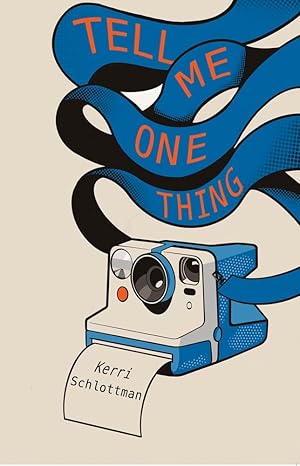
Kerri Schlottman's Playlist for Her Novel "Tell Me One Thing"
In the Book Notes series, authors create and discuss a music playlist that relates in some way to their recently published book.
Previous contributors include Jesmyn Ward, Lauren Groff, Bret Easton Ellis, Celeste Ng, T.C. Boyle, Dana Spiotta, Amy Bloom, Aimee Bender, Roxane Gay, and many others.
Kerri Schlottman's novel Tell Me One Thing is an impressive debut both vividly told and filled with empathetically drawn characters.
Publishers Weekly wrote of the book:
"[A] dynamic, character-driven debut... Schlottman acutely nails the misty, gold-hued atmosphere of the 1980s, and deeply explores themes of class and privilege...This thought-provoking work will put readers on the lookout for what the author does next."
In her own words, here is Kerri Schlottman's Book Notes music playlist for her novel Tell Me One Thing:
Music and art have always influenced my writing. My novel, Tell Me One Thing, was inspired by a photograph taken in 1990 by artist Mary Ellen Mark, which is titled Amanda and Her Cousin Amy and depicts nine-year-old Amanda in a kiddie pool in a bikini smoking a cigarette. In Tell Me One Thing, recent art grad Quinn captures a photo of nine-year-old Lulu smoking a cigarette while sitting on the lap of a trucker outside a motel. The photograph launches Quinn’s career, escalating her from a starving artist to a renowned photographer, while in a parallel life Lulu fights to survive in a volatile home. Traveling through the 1980s to present, the book goes deep into New York City's free-for-all grittiness while exposing a neglected slice of the rural rust belt.
With its 1980s setting, the book allowed me to revisit some of my favorite music from my youth. Music was incredibly formative for me as a young person. Every weekend, my best friend and I would go to the Skate Loft and roller skate to Madonna, Gap Band, Cyndi Lauper, and Blondie. At home, we’d host dance contests to our favorite songs. We listened to music when we were happy and sad, when we felt alone and misunderstood. Throughout the novel, I use music as both a way to deepen particular scenes and also to add another dimension to the storytelling. Below are some of the songs you’ll find in the book. I hope you’ll listen along.
“More Than This” by Roxy Music
This song is the quintessential '80s pop song. All I need is those first few notes and I’m instantly transported back to school dances, roller skating, big hair, and so much angst. But really, it’s the ultimate love song. Without being overwrought or too direct, it perfectly captures what it feels like to long for someone. This song is playing during a fairly heartbreaking scene in the novel that takes place between Quinn and the love of her life Billy. It also inspired the book’s title. I really wanted to include specific lyrics in the book, but, wow, it’s expensive to license song lyrics!
“Sweet Avenue” by Jets to Brazil
A line from “Sweet Avenue” goes – “This cigarette it could seduce a nation with its smoke” – and that fully inspired Lulu, the young character in my novel. I must have listened to this song at least a hundred times while I was writing her scenes. It’s a gritty song but also there’s something glowy about it. There’s so much optimism in the lyrics, but the song also feels broken and aching. Every time I dream of a film version of the book, I imagine this song playing in the very last scene of the novel. It has a redemptive quality to it that I hope mirrors what readers feel at that point in the book.
“Going Underground” by the Jam
“Going Underground” plays in the dive bar where Quinn and Billy celebrate that she’s having her first solo photography show. This song fully captures the cultural and social climate of the early 80’s. I chose it for that scene because of the tensions in the lyrics between being happy with what you have and being challenged by what society is telling you to have. In the course of one song, the Jam manages to evoke the global discontent of that specific era. My characters are feeling it, but don’t yet have the words for it, which makes it a great subtle message.
“Oh Bondage! Up Yours!” by X-Ray Specs
There’s a moment in the novel where Quinn’s friends Liv and Micky put the X-Ray Specs on the stereo during the after party of Quinn’s first solo show. Liv and Micky are both female artists as well, and while I don’t specify that this is the song they’re listening to, it’s classic X-Ray Specs with a gritty punk sound mixed with a huge dose of female empowerment. I made a choice for the women to play X-Ray Specs as a shout out to the challenges of being a female artist at that time and vying for attention when the arts were already so male dominated.
“I Love Rock ‘N’ Roll” by Joan Jett & the Blackhearts
This was my favorite song when I was a kid and still holds a huge place in my heart. It reminds me so much of growing up in the '80s. “I Love Rock ‘N’ Roll” is sultry and scratchy and dark and rough. Joan Jett was such a powerhouse with her gravelly voice. You just knew she didn’t give a shit about anything. I loved her black leather clothes and her feathered hair. I had to include this song in the book, and in fact, it features in one of the opening scenes.
“Someone to Watch Over Me” by Willie Nelson
There’s a scene in the novel that’s particularly painful because it’s an example of what a challenging life Lulu has. Maureen, her mom, is fighting with her boyfriend Hank and things have become very violent. Lulu is caught in the middle and, like most kids who have endured that kind of trauma, she is trying to be the smallest version of herself possible to not attract their anger. “Someone to Watch Over Me” is playing in the scene from a radio that has been overturned in the fight. I chose the song to connect thematically back to the idea that inspired the novel, that maybe someone would see Quinn’s photos of Lulu and come and help her. The song is also a reflection of the neglect Lulu endures. Willie is lamenting in his soulful voice about a lost love, yet it still resonates achingly well in that moment of the story.
“Material Girl” by Madonna
Lulu listens to Madonna on the Walkman Hank has given her for her fourteenth birthday in a scene where she’s about to make a very bad decision to earn money. She fast forwards the cassette tape from “Like a Virgin” to “Material Girl,” which is a choice I made to depict the upcoming loss of innocence, particularly in the name of money. Also, you can’t have a book set in the '80s and '90s without having some Madonna in it! Growing up, I loved Madonna. She was from Michigan, like me, which made it seem possible to do anything.
“Heart of Glass” by Blondie
“Heart of Glass” is not in the book, but a reference to Debbie Harry is. Debbie Harry is the epitome of 1980’s New York City, and I listened to “Heart of Glass” constantly while writing the book. Much like Quinn, Debbie is sexy but also punky. She embodies so much of that era with her experimentations in music and her gritty, downtown look. I drew hugely from her to envision Quinn’s character.
“Rhiannon” by Fleetwood Mac
In “Rhiannon,” Fleetwood Mac asks “Will you ever win?” which felt so appropriate to include in Lulu’s story. I chose the song to play in a scene where Lulu is about to be arrested for the first time as a young adult. At this point in the novel, she has already endured a load of challenges and the song is a harbinger of what more is to come. It’s a subtle suggestion in the book, a nod to other Fleetwood Mac fans who are familiar with the lyrics. Similar to other ways I use music in the novel, I hope the specific songs and the moments when they appear will invite readers to listen and connect the lyrics to deepen the themes of the book.
Kerri Schlottman is the author of Tell Me One Thing (Regal House Publishing, January 31, 2023). Her writing has placed second in the Dillydoun International Fiction Prize, been longlisted for the Dzanc Books Prize for Fiction, and was a 2021 University of New Orleans Press Lab Prize semifinalist. For the past 20 years, Kerri has worked to support artists, performers, and writers in creating new projects, most recently at Creative Capital in New York City where she helped fund projects by authors Paul Beatty, Maggie Nelson, Percival Everett, and Jesse Ball.
Kerri is a Detroit native who has lived in the New York City area since 2005. Previously, she’s been a massage therapist, a factory worker, and taught art to incarcerated youth. She holds a Creative Master’s degree in English from Wayne State University in Detroit.
If you appreciate the work that goes into Largehearted Boy, please consider making a donation.
Posted by david | permalink | post to del.icio.us
Shorties (Delia Cai Interviewed, An Interview with Tyler Bates, and more)
Delia Cai shared a list of books about coming of age as an Asian American at Electric Literature.
Cai discussed her new novel Central Places with Shondaland.
The Creative Independent interviewed composer Tyler Bates.
We can all go to school and study the works of John Williams and others who are amazing, but we’re really looking backward when we do that. When a person’s looking forward, they’re just taking on challenges, trying to figure out how to achieve something that they’ve never done before.
Justin Taylor profiled singer-songwriter Margo Cilker at the Oxford American.
I think she’s a rare generational talent, heir to an expansive tradition that encompasses not only the California-country of Merle Haggard, Gillian Welch, and Gram Parsons, but also the crossover country-rock of Neko Case, Katie Crutchfield, Amanda Shires, and Lucinda Williams. Her work doesn’t really “answer” the question of what country is or can be or should be; it obviates that question, because country has more to gain by making a claim on her than she does by making a claim on it.
95 year-end lists were added to the Largehearted Boy list of "best books of 2022" lists Monday (bringing the total to 1,528).
eBook on sale for $1.99 today:
Frederick the Great by Nancy Mitford
eBooks on sale for $2.99 today:
Father of the Rain by Lily King
eBooks on sale for $3.99 today:
To celebrate Largehearted Boy's 21st birthday today, I shared a 21-song playlist of songs featured on the site, a song from every year.
Patti Smith remembered Tom Verlaine at the New Yorker.
Electric Literature shared a new comic by Amy Chu.
Paste recapped January's best albums.
Han Kang talked to the New Yorker about her story in this week's issue.
Cover Me shared January's best cover songs.
The longlist for the 2023 Dublin Literary Award has been announced.
Congratulations to Largehearted Boy contributors Mona Awad, Graeme Macrae Burnet, Hannah Kent, Miriam Toews, Sequoia Nagamatsu, Lauren Groff, and Emily St. John Mandel.
Stream a new song by yunè pinku.
Peter Ho Davies talked revision with Write-minded.
Stream a new son by Xylouris White.
The New York Times profiled author Ben Okri.
Jeff Tweedy covered Television's "Venus."
Gene Luen Yang talked to CBR about adapting his graphic novel American Born Chinese for television.
The Quietus interviewed singer-songwriter Daryl Worthington.
If you appreciate the work that goes into Largehearted Boy, please consider making a donation.
Posted by david | permalink | post to del.icio.us
January 30, 2023
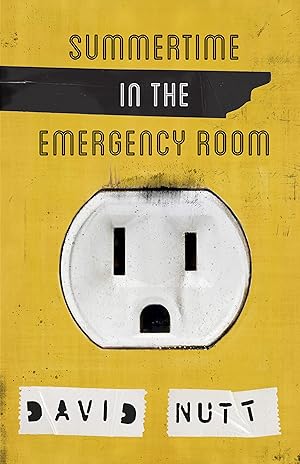
David Nutt's Playlist for His Story Collection "Summertime in the Emergency Room"
In the Book Notes series, authors create and discuss a music playlist that relates in some way to their recently published book.
Previous contributors include Jesmyn Ward, Lauren Groff, Bret Easton Ellis, Celeste Ng, T.C. Boyle, Dana Spiotta, Amy Bloom, Aimee Bender, Roxane Gay, and many others.
David Nutt's collection Summertime in the Emergency Room is filled with surprising and inventive stories of outcasts, told by one of our master storytellers.
Sam Lipsyte wrote of the book:
"When it comes to David Nutt, the only thing I love more than his sharp, inventive and seismically funny style is the deep humanity from which it springs. His is a brilliant and much needed voice in these sad, ridiculous times."
In his own words, here is David Nutt's Book Notes music playlist for his story collection Summertime in the Emergency Room:
The muzzy-headed characters lurching through these nine stories have been hobbled by loss and infirmity and, too often, their own poor choices and rash mistakes. They bungle opportunities. They self-medicate. They self-sabotage. In that spirit, I’ve paired their stories with songs that speak, I think, to their failures, their aches and afflictions, and also their wry humor and occasional (and mostly accidental) fortitude.
I was a floundering musician before I became a floundering writer. Much of the energy—and most of the joy—in writing, for me, resides in the boisterous clamor of the language. The clang, the fizz, the crunch. To this day, I remain somewhat bifurcated between playing in raucous bands and writing a kind of raucous fiction.
I doubled up a lot of songs because the bifurcated mind is not a decisive one.
THE BLISTER SISTERS
“Hammering So Hard” by Squirrel Bait
“Runaway Return” by Fugazi
An acerbic woman tries to cope with her twin sister’s suicide by retreating to their childhood home, only to be interrupted by her dead sibling’s doppelgänger, whom her mother seems to favor.
Louisville’s Squirrel Bait were teenagers when they recorded a pair of moody, hyper-caffeinated punk albums that were as brash as they were melodic. This is one of their teen-angst-iest songs, so it’s fitting for a story about a restless exile returning to the nest. Also, structurally, whether it’s an album or a story collection or a playlist: You gotta start hard, man. The Fugazi tune is a classic “black sheep returns to the flock” tale. As a co-middle child and prodigal son myself, I can tell you: This one hits home. And sometimes home hits back.
A KIND OF SWIMMING
“Outpatient” by Jawbreaker
“Chartered Trips” by Hüsker Dü
A disoriented father, recently discharged from a psychiatric facility after recovering from a nervous breakdown, defies his unofficial house arrest and sneaks out on a late-night journey across town, unraveling as he goes.
I logged a lot of hours in hospitals and doctor’s offices when I was a child. Spinal meningitis, appendicitis, Lyme disease, chicken pox, plantar warts: I collected maladies the way other kids did baseball cards. Despite my best efforts, infirmity has always crept into my fiction. “Outpatient” sets the scene. The anesthesia being administered. The soothing voice of medical professionals who are patiently awaiting their next coffee break. Those haunting words: “Count backwards from ten.” The Hüsker number captures the urgency of embarking on a long voyage, one that is mental as well as physical, rife with frustration and doubt, and no round-trip tickets offered, no guarantee of return.
THEORIES FOR THE ETERNAL DOG
“Dogs” by Pile
An agoraphobic man who can barely leave his apartment is tasked with caring for his homicidal drug dealer’s dog. So he dumps the dog on his elderly parents, and then mills about their house, drinking their beer, sleeping on their floor, another forsaken stray.
This song is unbearably sad. The good kind of sad. A solacing sad. Who doesn’t hear the barking of dogs in the distance as a clarion call for his or her own existential reckoning? Who are these well-adjusted people who shut their windows and resist the howls? Where do they live, and, more importantly, how do they live with themselves? My dog died last spring. Now my house is overrun with cats. Please send help. Oh lord, this song ruins me.
THE RIM
“The Wait” by Metallica
A crew of inept employees knocks a giant hole in the earth, accidentally killing their supervisor, and then they wait around for … what? Punishment? Salvation? Another meager paycheck?
One bright spot amid the incursion of cats in our household: My wife recently succumbed to my nostalgia for ’80s metal. Or in her words: “I’ve caught my husband’s midlife crisis.” The original song by Killing Joke is wilder and scuzzier, and—let’s face it—vastly superior, but the Metallica version is the one I grew up with as a preteen metalhead in suburban New Jersey, and it’s the one that I would listen to right now if I was knocking a giant fucking hole in the earth for minimum wage.
OUR LADY OF BLEAK HEARTS
“Spikes to You” by Drive Like Jehu
“Straight into Darkness” by Tom Petty and the Heartbreakers
A family has a calamitous auto accident, and the nuclear unit gets blasted to bits. The wife is zombified. The child is mute. And the husband? He seems mostly fine. But maybe that’s because he’s been deeply deranged all along.
Drive Like Jehu’s Rick Froberg is not what I’d charitably call an intelligible singer, but his lyrics are often brilliant, in the caustic, twistily menacing manner of cutlery salesmen and morgue attendants. He’s also kind of hilarious, especially when he’s sharpening his knives on the suburbs. “Bits and guts and pieces hanging from the trees. Stumpy mow the lawn, c'mon, ya gotta bare piece a' ground.” Darkness comes in many flavors and gradients. Tom Petty shows up with his cherry-sunburst Rickenbacker and craggy drawl and magnificent horse teeth. Frankly, his enunciation isn’t much better than Froberg’s, but the sentiment is very much the same, both men standing amid the blasted landscape of the domestic dream, squinting into the night, wondering: Is that darkness me?
MAGELLAN
“The Lonely One” by the Wipers
“Who Rocks the Party” by Les Savy Fav
A quiet, lonesome guy, who happens to be hiding some horrific scarring, gets duped into a blind date with a woman who happens to have a fetish for meek men with horrific scarring, yet somehow the matchmaking doesn’t stick. Our sad bachelor ends up at a party that’s even more disastrous than the date.
Almost all of these stories feature socially inept loners trying to navigate a civilization that has atomized into ad-hoc cults and strange cliques. If you know anything about Greg Sage from the Wipers, he’s a loner par excellence: built his own analog gear, shunned scenes and bandwagons and cash-ins, remained ferociously independent, all to the detriment of whatever kind of career a gloomy-neo-psychedelic-garage-punk-alien-outlier might expect to scrape together. There’s no subtext in this song. The pain of solitude sits on the surface, tightening its necktie—or is that a noose?—while blinking back the tears. I didn’t realize just how terribly lonely my characters were until I saw them stacked side by side in book form. At the same time, a lot of these stories conclude with parties, weddings, group gatherings, although these never seem to end well, either. Les Savy Fav has a knack for writing unhinged party anthems, the kind that make parties feel like the most thrilling and horrible night of your life. Who rocks the party? Agony. Agony rocks the party.
SUPERIOR PARACHUTES
“Send His Love to Me” by PJ Harvey
“Who Are You” by Tom Waits
A bodybuilding paraplegic harbors an unrequited crush on his charismatic stoner best friend, the one who accidentally broke his—the paraplegic’s—neck in an inane stunt gone awry.
Love: It’s the worst affliction of all, right? With the exception, I suppose, of death by fire or drowning or hydrochloric acid or high-rise defenestration. PJ Harvey and Tom Waits make any type of romantic dalliance sound both sensuous and grueling, lurid and lush, and not without a few torn shirts and broken bones along the way.
BEATRICE AND BONE
“Hey Cuz” by the Afghan Whigs
“1049 Gotho” by Idles
A pair of drug-addled office temps attempt to negotiate the incongruities of white-knuckled recovery and banal, white-collar life.
Drugs crop up often in these stories, which is a bit weird because I find most drugs to be a tedious waste of time and money and brain wattage that would be better expended by sitting around the house, making playlists for books nobody will read. I guess it’s the desperation and vulnerability of addiction that interests me—what a character in another story calls “all these temporary patches that require additional patches.” Addiction stories are love stories, of course, in which love is catastrophically misdirected or misplaced, and there’s also a platonic love story here, shoehorned into the squalor.
“Hey Cuz” crystalizes that manic, pharmaceutically-induced desperation at its most red-eyed and skeezy. “1049 Gotho” is desperation of a different, but no less tortured, order: the twitchily churning human brain’s inability to chill the fuck out and not destroy itself with grim thought. Both songs have the rousing propulsion, the lunatic careening, of Wile E. Coyote skidding off the ledge of a very steep cliff and greeting the nothingness with a smirk, then a scowl. Then a swift plummet.
A quick aside: I was a huge fan of the Afghan Whigs in the early-to-mid ’90s. Years later, I found out my father began his journalism career working for the father of the Whigs’ bass player (John Curley and John Curley Jr., respectively) at a newspaper in Bridgewater, NJ, where I had grown up. In his 20s, the younger Curley was a photographer for a Gannett newspaper in Cincinnati. In my 20s and 30s, I worked for a bunch of Gannett papers in NJ and NY. Nice symmetry there, the artsy sons following their fathers into a doomed trade, although Junior ended up in the Afghan Whigs, and I didn’t.
GRIEFERS
“Lionel Valhalla” by Eighteen Hundred and Froze to Death
“Auto Rock” by Mogwai
A sports editor takes a brief break from her disappointing newspaper career to visit her declining father and drag him to a wedding that neither wants to attend. They don’t have a very good time. They don’t even attend the right wedding. The trip is a herky-jerky, death-haunted affair, with a lot of sarcastic jabs to deflect the sourness and sadness between father and daughter, and daughter and herself. Which I guess is an accurate summary for the book as a whole? The fact is, many of these stories were written after my father died suddenly. The song “Lionel Valhalla” concerns a guy who hangs himself, then goes to the underworld and discovers the afterlife is just as mundane and dehumanizing as the depressed existence he tried to flee. Is that a downer? You betcha. “Auto Rock” is the encore, or maybe the outro, the wistful coda. A kind of funeral dirge for aging indie-rock melancholics who eke out a little solace from loud guitars and sad-ass songs. It seems apt to conclude with an instrumental, too, something pensive and wordless. Because, my god, what do we need all these useless words for anyway?
David Nutt is the author of the short-story collection, Summertime in the Emergency Room, published by Calamari Archive in May 2022, and a novel, The Great American Suction (Tyrant Books, 2019). He lives in Ithaca, New York, with his wife and two cats.
If you appreciate the work that goes into Largehearted Boy, please consider making a donation.
Posted by david | permalink | post to del.icio.us
Shorties (Hua Hsu Interviewed, Tom Verlaine Remembered, and more)

Hua Hsu discussed his memoir with CBC Radio.
NPR Music remembered Tom Verlaine.
95 year-end lists were added to the Largehearted Boy list of "best books of 2022" lists Monday (bringing the total to 1,528).
eBook on sale for $1.99 today:
Edgar Allan Poe: Poetry & Tales by Edgar Allan Poe
eBook on sale for $2.99 today:
To celebrate Largehearted Boy's 21st birthday tomorrow, I shared a 21-song playlist of songs featured on the site, a song from every year.
The New York Times shared a quiz about novels set in New Orleans.
All Songs Considered and Paste recommended the week's best new albums.
The longlist for the 2023 Dylan Thomas Prize has been announced.
Pitchfork interviewed John Darnielle about his role on Poker Face.
The New York Public Library has acquired the archive of Joan Didion and John Gregory Dunne.
Bandcamp Daily explored the Lithuanian experimental music scene.
The Christian Science Monitor recommended January'' best books.
Junkee profiled Soccer Mommy's Sophia Allison.
Town & Country recommended horror fiction.
Stream a new song by Korean shoegazers Parannoul.
Carolina De Robertis has been named the 2022 winner of the John Dos Passos Prize for Literature.
Lincoln Michel interviewed Martin Riker about his new novel.
Stream two new songs by Monika Bullette.
If you appreciate the work that goes into Largehearted Boy, please consider making a donation.
Posted by david | permalink | post to del.icio.us
January 27, 2023
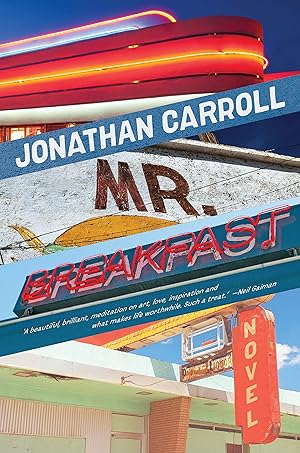
Jonathan Carroll's Playlist for His Novel "Mr. Breakfast"
In the Book Notes series, authors create and discuss a music playlist that relates in some way to their recently published book.
Previous contributors include Jesmyn Ward, Lauren Groff, Bret Easton Ellis, Celeste Ng, T.C. Boyle, Dana Spiotta, Amy Bloom, Aimee Bender, Roxane Gay, and many others.
Jonathan Carroll's novel Mr. Breakfast is as smartly put together as it is compelling, a genre-defying masterpiece.
Kirkus wrote of the book:
"Few recent works of fiction in any genre have touched on the vagaries of life, love, and art more movingly or with deeper understanding. An intoxicating, deeply affecting novel by the influential fantasist."
In his own words, here is Jonathan Carroll's Book Notes music playlist for his novel Mr. Breakfast:
"Take It With Me" by Rachael Price
Cover versions of really good songs often end up duds. "Take It With Me" is one of my favorite Tom Waits songs. Longing, loss, lust—they’re all there in one package, wrapped in Waits’ inimitable froggy voice. So I was skeptical when I came across Rachael Price’s version of it, especially because I’d never heard of her before. But she’s the real deal and this is a big bell ringer for me. In its very different way, just as good as the Waits original.
"Love Me Still" by Bruce Hornsby
One of the themes of Mr. Breakfast is who we (do or don’t) end up with in our lives and why. This was another song I heard for the first time sung by Rachael Price, only to learn it was written by the wonderful Chakka Kahn and Bruce Hornsby. I tracked down each of their versions and liked the Hornsby more. It’s quieter and more in line with what I think is the through line of the song—I love you now and am sure I always will. But do you feel the same way? A very dangerous question to ask any time, especially of someone close to your heart. Chakka’s version is brash and bluesy, Hornsby’s is more like a wary hymn.
"Wandering Boy" by Randy Newman
Brilliant as his lyrics often are, Newman holds his emotions pretty close to his chest. There’s a lot of irony/sarcasm/cynicism in songs like "Kingfish" and "Short Prople." But when he lets his guard down in songs like the recent WANDERING BOY, he can break your heart in a lot of different ways. ‘Sillage’ is a beautiful French word that means the trace of perfume still lingering in a room after the person wearing it has left. I’ve often thought the word could also be applied to the effect people who are no longer in our lives, still live on, sometimes very strongly, albeit only as memories. Who they were and what effect they had on us-- a kind of psychic sillage, both good and bad. “Where is my wandering boy tonight?” could stand for wondering about an absent member of the family, someone important who has died, or a once great love who haunts our memory even years later like sillage.
"Aquaplano" by Paolo Conte
Like Marcello Mastroianni or Giancarlo Giannini, Paolo Conte exemplifies that you can be the coolest guy in the room well into what most people would consider serious old age. With his great pitted face, black suits and most especially gravelly, singular voice, his debonair worldliness both in voice and demeanor make his music universal, even if you don’t speak a word of Italian. For years his music has been on in the background when I am writing right up until recently when I dotted the last I of Mr. Breakfast.
"Even the Darkness" by Barr Brothers
I think the first time I heard this song was on the closing credits of a TV show. All I remember was as soon as I heard the first few chords I put down what I was doing and started listening closely. I liked the song so much I posted it on my Facebook page and the response was as enthusiastic as my own. I’ve been listening to the song regularly ever since and it still has that new car smell to it for me.
If you appreciate the work that goes into Largehearted Boy, please consider making a donation.
Posted by david | permalink | post to del.icio.us
Shorties (An Excerpt from Sabrina Orah Mark's Memoir, The Best Covers of Lucinda Williams Songs, and more)

The Rumpus shared an excerpt from Sabrina Orah Mark's memoir-in-essays Happily.
Cover Me listed the best covers of Lucinda Williams songs.
95 year-end lists were added to the Largehearted Boy list of "best books of 2022" lists Monday (bringing the total to 1,528).
eBooks on sale for $1.99 today:
As I Lay Dying by William Faulkner
The Secret Chord by Geraldine Brooks
eBooks on sale for $2.99 today:
The Man in the Wooden Hat by Jane Gardam
NPR Music interviewed composer Missy Mazzoli.
I didn't meet another female composer until I was in my 20s, and I didn't meet a professional female composer until I was in college. I didn't really have colleagues in my early career who were other women. That sort of support network is essential as an artist — having people around you who can share that aspect of your experience is really key. Anytime you're the only "something" in a group, that is usually not the ideal circumstance in which to thrive and be creative.
Jazz Night in America profiled John Zorn.
"All my compositions are platforms to enable creativity," says Zorn. "That's the bottom line." Jazz Night is proud to capture some of that creative energy, with full knowledge that the task, like Zorn's larger mission, will always be unfinished.
Wonderland interviewed Vagabon's Lætitia Tamko.
An English version of the French graphic biography In Search of Gil Scott-Heron will be published in July.
The Pitchfork Review explored the state of ambient music.
Patricia Engel talked books and reading with the New York Times.
Stream a new song by Bodywash.
Vogue listed the best LGBTQ+ books of the year so far.
Stream a new song by P.E.
Electric Literature shared an essay from Adina Talve-Goodman’s posthumously published collection Your Hearts, Your Scars.
Stream two new tracks by Katie Gately.
Eleanor Shearer discussed her novel River Sing Me Home with Shondaland.
I spoke to people about what they thought about the legacy of slavery: Did they feel like the islands were still affected by the legacy of slavery? What had been passed down in terms of memory? Was there anything still structurally on the island that they felt was affected by slavery? That sense of a memory gap between the Caribbean and the U.K. was a very prominent theme. In the U.K., the way that we remember slavery and teach it as history is very, very different to what’s remembered in the Caribbean.
The longlist for the Small Press Book Prize has been announced.
AwkwardSD interviewed author Kevin Maloney.
Roxane Gay and Debbie Millman chronicled their cruise to Antarctica at AFAR.
The New York Times recommended the week's best new books.
If you appreciate the work that goes into Largehearted Boy, please consider making a donation.
Posted by david | permalink | post to del.icio.us
January 26, 2023
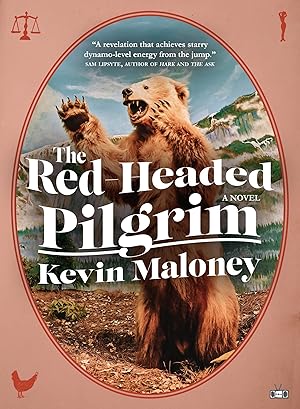
Kevin Maloney's Playlist for His Novel "The Red-Headed Pilgrim"
In the Book Notes series, authors create and discuss a music playlist that relates in some way to their recently published book.
Previous contributors include Jesmyn Ward, Lauren Groff, Bret Easton Ellis, Celeste Ng, T.C. Boyle, Dana Spiotta, Amy Bloom, Aimee Bender, Roxane Gay, and many others.
Kevin Maloney's The Red-Headed Pilgrim is one of the most absurdly funny yet poignant novels I have ever read. If Augie March had been guided by the Beats and born in Oregon, this could have been his story.
3:AM Magazine wrote of the book:
"Halfway between the ranting of a beloved, inebriated uncle at the family holiday and the working diary of an emerging standup comic, The Red Headed Pilgrim is the story of Kevin Maloney, an outcast in a world of outcasts, telling us of his adventures from existentially-unnerved teenager to neurotic father. From the very beginning, starting with the book’s charming and effective prologue, Maloney plays with the novel form, not so much breaking the fourth wall as challenging its very existence."
In his own words, here is Kevin Maloney's Book Notes music playlist for his novel The Red-Headed Pilgrim:
My novel, The Red-Headed Pilgrim, is a dark comedy about a young man who travels around America trying to find the meaning of life and accidentally gets his girlfriend pregnant instead. Oops. It’s loosely based on my life. Looooosely. Reviewers keep calling it autofiction. I call it coulda-fiction. As in, it coulda happened this way. It sort of happened this way, but no…. this isn’t what happened. Not like this. Not really.
The truth is, I can’t remember what’s real anymore. I smoked a lot of pot in high school—mighty bong rips that turned my brain into Cocoa Pebbles. That didn’t help. Then I started writing books and stories based on my life, changing names and moving events around, making my protagonist smoke DMT off the hood of a cop car, when in reality I smoked pot out of a brass pipe I bought at the mall. At some point all the wires got crossed.
What follows is a soundtrack for my book, The Red-Headed Pilgrim. It’s a soundtrack for my life too and all the made-up spaces in between. These aren’t my favorite songs. That would be a lot of Jason Molina, Townes Van Zandt, and the magical/mystical piano of Emahoy Tsegué-Maryam Guèbrou. No… these are the songs that immediately transport me to a certain time and place in my life. Nostalgia heroin. A mixtape time machine, destination 1994-2007. Here we go.
“Fade Into You” by Mazzy Star
Oh god. Jesus Christ. Is there a more depressing song on Planet Earth? “Nutshell” by Alice in Chains is bleaker, but “Fade Into You” feels like being held in a womb of narcotics while your life falls forever apart. I listened to So Tonight That I Might See on repeat for most of my senior year in high school while smoking clove cigarettes next to my open window. It was raining outside. My best friend was dating my girlfriend. Ex-girlfriend. That happened in real life. It happens in my book. It happens sometimes in my dreams. Everything was bad, but Mazzy sloshed through my veins like sad, beautiful poison.
“Under the Bridge” by the Red Hot Chili Peppers
They’re probably the most hated band in America, but I love them. The guitarwork in this song is straight Jimi Hendrix. The video was directed by Gus Van Sant. It feels like a three-minute cut of My Own Private Idaho. Anthony Kiedis wears a t-shirt that says “TO HELL AND BACK.” John Frusciante wears a Nordic ski hat with ear flaps and plays his Jazzmaster like a forlorn elf possessed with magic fingers. Hearing this song for the first time in 1991 made me believe in God. I haven’t been the same since. In my novel, the protagonist gets stoned and walks around his neighborhood listening to Blood Sugar Sex Magik on his Sony walkman. That’s how I spent most of 1994. Also 1995. It was heavenly.
“Sugar Magnolia” by The Grateful Dead
I don’t love the Dead. Maybe I don’t even like them, but before Portland was a hipster paradise teeming with food carts and indie bands, it was a depressing metropolis full of rain puddles and ex-hippies brewing beer in their basements. Cute girls in the suburbs had armpit hair and wore patchouli. I was bewitched. That smell still makes me tremble with nervous pubescent joy. My best friend Zach was obsessed with the Dead. So, we listened to them. A lot. They’re all mixed up with the dozen or so times I ate psychedelic mushrooms in the late '90s. When you did drugs back then, someone in your group put on the Dead. There wasn’t anything you could do about it. You just nodded, hummed along, and talked to the rhododendrons.
“An Introduction to Indian Music” by Ravi Shankar
In the late '90s, on a whim, I bought the cassette The Sounds of India by Ravi Shankar. I thought it would open my third eye. Maybe it did. But it’s a strange album. Ravi doesn’t just play music. He teaches you how to hear it. It’s part album, part music lesson, part meditation exercise. He says things like, “The accompanying tabla gives, if I may say so, a reply to the lead instrument, such as the sitar.” Then there’s a flurry of hands and drums, followed by a trill on the sitar and lingering silence. I listened to this album the summer I lived at a roadside attraction in Helena, Montana that I call “Frontier Village” in my novel, but was called Frontier Town in real life. I was lovesick. I was always lovesick in the '90s. The internet didn’t exist. Not a good one anyway. The only thing to do was fall in love with somebody who didn’t love you back and feel miserable all the time, and try to open your third eye.
“Hearts & Bones” by Paul Simon
This might be the prettiest song ever written. Damn you, Paul Simon. He sings about the Sangre de Cristo Mountains, the “Blood of Christ Mountains” outside Santa Fe. Have you ever been there? You drive up this road from Albuquerque and it just gets prettier and prettier and prettier until you pull over to the side of the road and throw up from beauty. Before my first wife and I got married we drove across America. At a tea house in Santa Fe, she offered a necklace to a stone goddess. Only much later did we realize it was a fertility goddess. Oops. A month or two passed and we found out she was pregnant. I don’t care how much of an atheist you are… in New Mexico, witchcraft is 100% real. Beware of stone goddesses and birth control.
“An American Prayer” by Jim Morrison
This song is so stupid. Jim Morrison is a terrible poet. But for some reason I love this song. How do I love such a stupid song? Because I was 18 once in the suburbs and nothing was mystical. I walked outside and beheld a Taco Bell that used to be a field of horses. I was baptized in a Bed, Bath, and Beyond. I went to kindergarten at American Eagle Outfitters. For us, for the 18-year-old suburbanites, there was Jim. He said, “I touched her thigh and Death smiled,” and we felt our spirits for the first time. We felt breath moving in and out of our lungs. Who cares that it was just a word-salad of serpent-talk and half-baked Arthur Rimbaud-isms? We couldn’t get enough.
“Sugar Mountain” by Neil Young
Oh Neil, you beautiful perfect Canadian. There’s a scene in The Red-Headed Pilgrim that’s pretty close to real life. I’d just gotten home from a solo trip to Europe. My girlfriend met me unexpectedly at the Boston airport. We spent an incredible night in the city, then traveled the next day to Newburyport where her mom lived. We went to the beach and got sunburned, then later had sex, listening to Decade by Neil Young. It was one of the simplest, happiest days of my life. “Sugar Mountain” is a perfect song. It doesn’t make a lot of sense, but you know what it’s about. It’s about your life. You and this woman lying next to you and childhood and all the agony of knowing what’s just down the road, but can’t we hide here in this moment for just a little while?
“A Love Supreme, Pt. I – Acknowledgement” by John Coltrane
What can I say about this song? It’s less music than a sonic incarnation of the sun rising in the east. It’s what the Buddha would listen to if the Buddha had Spotify. Actually, the Buddha would have Apple Music. The saxophone reminds me of what is possible in life if you stop what you are currently doing. Stop everything. Take a deep breath, then turn around and walk in the opposite direction. If my liver ever gets pickled and I decide to get sober, I’ll do it by listening to this song over and over nonstop for a year and walking around picking wildflowers and reading the Upanishads. These days so many people are unhappy but there are literally an infinite number of ways to live this life. Throw your phone away. Join a monastery. Listen to John Coltrane.
“Ne Me Quitte Pas” by Nina Simone
I don’t know how to describe what happened to me in the late '90s. One minute I was living in Beaverton, Oregon, watching MTV and Beavis and Butthead, and then suddenly for no reason I was in a Greyhound bus that took me to Burlington, Vermont, a city that exists outside the space-time continuum. I lived there for most of a decade. The '90s turned into the 2000s. Things happened. Gilmore Girls. Britney Spears. Low-rise jeans. But nobody had TVs in Vermont. Nobody had computers or the internet. You walked down the street and someone thought you looked cool and you went to their house and drank red wine and listened to records on vinyl. Somewhere in Portland or New York or L.A., Elliott Smith was introducing America to his seductive, soft croon, but I was listening to Edith Piaf and Nina Simone and reading novels by Emile Zola and Turgenev. I smoked a corncob pipe. Nobody thought it was weird.
“Both Sides Now” by Joni Mitchell
This is the wedding song in The Red-Headed Pilgrim. Was it my wedding song in real life? I can’t remember. When my ex-wife and I first started dating, she gave me a mixtape of just Joni Mitchell songs. On the paper on the inside flap, in her weird handwriting, with gold and red pens, she wrote little notes about how good each song was. My ex-wife’s biggest advice was… don’t sleep on Hejira! I don’t think I fully appreciated this until a couple decades later when I was watching the Bob Dylan documentary Rolling Thunder Review. There’s this scene where Bob starts strumming along with Joni. She’s just written “Coyote.” She’s calling out chord changes. Bob is lost. Eventually everybody just shuts up and listens because she is in a holy place that nobody, not even Bob, fully understands.
“Decades” by Joy Division
Did I say “Fade Into You” and “Nutshell” were the saddest songs ever? Scratch that. The saddest song ever is “Decades” by Joy Division. Also: the entire album by the guy from the Microphones that he wrote after his wife died of cancer where he’s basically like, “I am looking at the bed where you used to sleep and our daughter is in the other room and she looks like you and I can’t stop crying.” Like… don’t listen to that album. Or listen to it once and then never again. It’s beautiful but it’s too much. But Joy Division, oh lovely sad friends. They came into my life kind of late. When I was 28 or so and going through a divorce. What a great time to discover Joy Division! Just when you thought life couldn’t get even emptier, listen to the prettiest music ever written by a guy who had Dostoyevsky-like seizures and then killed himself. Joy!
“The Seer’s Tower” by Sufjan Stevens
After my wife said she didn’t want to be married to me anymore, I walked out of a cave and blinked into the light and went into a bar and there were young people there. Their music wasn’t my music. It was like grunge but less distortion, more feelings. I hated it at first, then begrudgingly admitted that it was actually very good. Years later, my current wife told me about a time she met Sufjan Stevens. I misunderstood her and thought she said she had sex with Sufjan Stevens, but it turns out they just hung out and talked. I hated him for a while, thinking he had slept with my wife. Then one day, she said, “We didn’t sleep together. Where’d you get that from?” Suddenly I liked his music again. It was safe. Have you heard this song? Other ones get more attention, but this one… oh damn. Sufjan. I know you didn’t have sex with my wife, but if you had, I might have forgiven you for writing this beautiful piece of music.
“Rock ‘n’ Roll Suicide” by David Bowie
In 2006 or so, I was at the lowest point of my entire life. I was drinking too much. My wife had left me and seemed to be dating my next-door neighbor. Next door as in we shared a wall in an apartment building. I wasn’t doing well. I wanted to die. But also… MySpace had just been invented and you could post whatever name and face you wanted. I decided the only way I would survive was to invent an alter ego in the fashion of David Bowie’s Ziggy Stardust. My alter ego was named “Captain Clio.” I wore a red feather boa and a captain’s hat and lipstick and fishnet stockings and wrote most of a rock opera and played it on a few different occasions in Burlington, Vermont. That actually happened. Eventually I didn’t want to die anymore. Life got really messy, and I ended up back in Portland, Oregon, the city of my birth. There were much better musicians than me in Portland. A lot of them. I quit making music and decided to write a novel. A funny weird big mess that told the story of my life but upside-down and inside-out. If The Red-Headed Pilgrim ever gets made into a movie, there should be a scene where the sad broken hero hears “Rock ‘n’ Roll Suicide,” and outside the clouds part and a sunbeam comes through the window, and for a few seconds everything feels okay.
Kevin Maloney is the author of Cult of Loretta and the forthcoming story collection Horse Girl Fever. At times a TJ Maxx associate, grocery clerk, outdoor school instructor, organic farmer, electrician, high school English teacher, and teddy bear salesman, he currently works as a web developer and writer. His short stories have appeared in Hobart, Barrelhouse, Green Mountains Review, and a number of other journals and anthologies. He lives in Portland, Oregon, with his wife Aubrey.
If you appreciate the work that goes into Largehearted Boy, please consider making a donation.
Posted by david | permalink | post to del.icio.us
Shorties (A Story from Patricia Engel's New Collection, An Interview with Yo La Tengo's James McNew, and more)
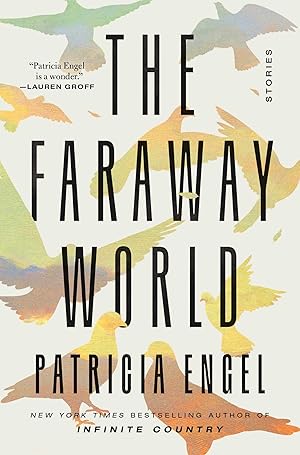
Electric Literature shared a story from Patricia Engel's new collection The Faraway World.
Aquarium Drunkard interviewed Yo La Tengo's James McNew.
95 year-end lists were added to the Largehearted Boy list of "best books of 2022" lists Monday (bringing the total to 1,528).
eBook on sale for $1.99 today:
Abraham Lincoln: The Prairie Years by Carl Sandburg
eBooks on sale for $2.99 today:
The Great Railway Bazaar by Paul Theroux
Jeff Guinn discussed his book Waco: David Koresh, The Branch Davidians and a Legacy of Rage with Fresh Air.
Maple Glider covered Shania Twain's "You're Still the One."
Esquire Middle East recommended new Arab books.
Pitchfork profiled the band Wednesday.
The Creative Independent interviewed author Allie Rowbottom.
Stream a new song by Steve Gunn and Bing & Ruth.
Gabrielle Bates discussed her debut poetry collection with Shondaland.
"Poetry is so coy. In my experience, it has a way of saying, “F--k your intentions,” and winking. Then it reveals things, if I let it. I’m vexed by this aspect of poetry, but it’s also what makes poetry so valuable to me."
Bandcamp Daily profiled musician Kristen Oppenheim.
“I first started working with just narratives of my own, just stories that I was repeating, and recording stories of my own,” Oppenheim explains over the phone from her home in Park Slope, Brooklyn. “In the beginning, I would reference songs that were coming on the radio, that I was hearing in my own imagination, along with writing my own stories to record; throughout the whole ‘90s, I did that.”
Caroline Corcoran recommended novels about office jobs at the Guardian.
Stream a new song by Kevin Morby.
The OTHERPPL podcast interviewed author David S. Mills.
Stream a new song by Oval.
Jean Kyoung Frazier discussed her next book with Electric Literature.
Stream a new song by Jouska.
The New York Times remembered author Paul La Farge.
Stream a new Patrick Wolf.
The New Yorker is tracking its favorite books of 2023.
Stream a new song by Fever Ray.
Heavy Feather Review shared an excerpt from Angela Woodward's new novel.
Stream a new song by Yours Are The Only Ears.
If you appreciate the work that goes into Largehearted Boy, please consider making a donation.
Posted by david | permalink | post to del.icio.us
January 25, 2023
Angela Woodward's Playlist for Her Novel "Ink"

In the Book Notes series, authors create and discuss a music playlist that relates in some way to their recently published book.
Previous contributors include Jesmyn Ward, Lauren Groff, Bret Easton Ellis, Celeste Ng, T.C. Boyle, Dana Spiotta, Amy Bloom, Aimee Bender, Roxane Gay, and many others.
Angela Woodward's novel Ink conflates atrocity and everyday life to powerful results.
Hannah Lillith Assadi wrote of the book:
"Angela Woodward's Ink mines the relationship between the word as witness and the nightmares buried beneath our words. This is a novel that marries politics and poetry in the profoundest sense."
In her own words, here is Angela Woodward's Book Notes music playlist for her novel Ink:
One morning, I started my car, and it filled with unknown music. As I backed out of the driveway into the busy street and threaded rush hour traffic, the song seemed to narrate the feeling that the situation suppressed—the mild horror of being encased in metal, alone amid a crowd of other machines, finding my way effortlessly towards a workday that promised routine and false cheer.
My daughter had just gotten her driver’s license, and had left a home-made CD compilation in the player, on at top volume. Rather than being annoyed at the infliction of her teen tastes on me, I was overcome by my first exposure to Arcade Fire. She told me later that she usually listened to music on headphones as she walked to her large public high school alone in the dark. In leaving the disc in the car, she’d accidentally let me in on her private world. My sudden craving for more Arcade Fire—I immediately bought all the albums—created a commonality between us that we hadn’t known was there. I had let slip the dread I so carefully hid from my kids, the conflict I felt about my conscientious conformity. My kids were the ones who needed a house and a car and middle-class stability. I wouldn’t have lived in such a rigid way, I thought, if I weren’t trying to protect them. It was an exposing moment, that the beautiful, clashing sadness of The Suburbs spoke to all of us in the household.
My novel Ink revolves around two typists, Sylvia and Marina, who are employed to transcribe taped interviews with men detained at Abu Ghraib, detailing their abuse at the hands of American forces at the Iraqi prison during the first phase of the Gulf War. One of starkest features of this grisly chapter of American history was how public it was. The shocking images from Abu Ghraib found their way to the media almost immediately. While Julian Assange quipped “Lights on, rats out” as a justification for exposing secrets through Wikileaks, it seemed to me that with Abu Ghraib the lights were on the whole time. We the public squinted our eyes shut and created our own darkness in order to live with those images of naked, cowering men and their laughing captors.
Ink negotiates different levels of hiding and exposure, where the atrocity is out in the open, and our reaction to it is buried. My daughter hadn’t deliberately hidden her music from me, but I hadn’t heard it until that morning. And she hadn’t had access to the part of me that reacted to these sad tunes. We had each shielded the other from something that was in retrospect obvious. My playlist interweaves two threads. One is songs without words. These convey emotion and mood without being explicit. The other thread is teen angst from the early 2000s, chosen by my son and daughter from songs they listened to then. Music is at the heart of Ink, as Sylvia only begins to feel the impact of her transcription when she hears her son sing. I had a particular song in mind for this scene, “How to Save a Life,” the 2005 hit by The Fray, which ends the playlist.
“Nu_ Chanic,” Kara-lis Coverdale
“Deep Blue,” Arcade Fire
“Jesus of Suburbia,” Green Day
“3 Rags for Piano, No. 2: Circus Dreaming,” Gene Pritzker, Kai Schumacher
“My Heart Is the Worst Kind of Weapon,” Fall Out Boy
“Girl Anachronism,” Dresden Dolls
“I Will Follow You Into the Dark,” Death Cab for Cutie
“Sprawl II (Mountains beyond Mountains), Arcade Fire
“Single Petal of the Rose” from the Queen’s Suite, Duke Ellington
“I’m Not Okay (I Promise),” My Chemical Romance
“Nocturne,” Julian Lage
“How to Save a Life,” The Fray
Angela Woodward is the author of the novels End of the Fire Cult and Natural Wonders. Natural Wonders won the Fiction Collective Two Doctorow Innovative Fiction prize in 2015. Rain Taxi called it "a wide-ranging meditative book that is by turns delightful, clever, and heartbreaking." Woodward's short fiction has won the Pushcart Prize and been anthologized in Dzanc Books' Best of the Web. She has published stories and essays in many journals, including the Kenyon Review, Ninth Letter, Los Angeles Review of Books, and American Chordata.
If you appreciate the work that goes into Largehearted Boy, please consider making a donation.
Posted by david | permalink | post to del.icio.us
Shorties (Svetlana Alexievich Profiled, Sadie Dupuis Interviewed, and more)

The Asahi Shimbun profiled author Svetlana Alexievich.
Full Stop interviewed musician and post Sadie Dupuis.
95 year-end lists were added to the Largehearted Boy list of "best books of 2022" lists Monday (bringing the total to 1,528).
Paste previewed 2023's most anticipated albums.
Gabrielle Bates recommended acts of betrayal in literature at Electric Literature.
Stream a new song by Clark.
Debutiful interviewed author Oindrila Mukherjee.
Stream a new song by Fucked Up.
Book Riot and Literary Hub recommended the week's best new books.
Stream a new song by Lucinda Chua.
The New Yorker profiled writer Pamela Paul.
Stream a new Mudhoney song.
Brecht de Poortere has ranked the top 1,000 literary magazines.
Stream a new song by Blondshell.
Ottessa Moshfegh talked screenwriting with the Hollywood Reporter.
Stream two new Gruff Rhys songs.
Stream a new song by R. Ring.
If you appreciate the work that goes into Largehearted Boy, please consider making a donation.
Posted by david | permalink | post to del.icio.us
January 24, 2023
Gabrielle Bates's Playlist for Her Poetry Collection "Judas Goat"

In the Book Notes series, authors create and discuss a music playlist that relates in some way to their recently published book.
Previous contributors include Jesmyn Ward, Lauren Groff, Bret Easton Ellis, Celeste Ng, T.C. Boyle, Dana Spiotta, Amy Bloom, Aimee Bender, Roxane Gay, and many others.
Gabrielle Bates's poetry collection is both precise and filled with humanity. This is an auspicious debut.
Vulture wrote of the book:
"These poems are both generous and spare, full of unconventional portraits of longing―for safety, for love, for a motherhood one doesn’t truly desire. Bates is a wise, tender witness to the parts of ourselves we rarely expose."
In her own words, here is Gabrielle Bates's Book Notes music playlist for her poetry collection Judas Goat:
My poetry collection Judas Goat is interested in the harrowing undercurrents of intimate relationships. The book is haunted by many things—the Deep South, the Bible, domesticated animals, death—but while the characters are alert to violence and risk, they are also driven by desire and longing: for meaningful connection, spiritual wisdom, and a wildness of abandon.
The thirteen songs collected here speak to these intersections and influences.
Wild Sweet Orange - “Ten Dead Dogs” - We Have Cause to Be Uneasy
My book opens with a very intense poem called “The Dog,” so this song feels appropriately macabre to kick us off. Also, Preston Lovinggood, the lead singer of Wild Sweet Orange, is from my hometown in Alabama, and I used to listen to the Wild Sweet Orange EP while driving around angstily in my first car, so the songs are imprinted on my heart forever. Writing Judas Goat, I was often reaching back towards coming-of-age memories for inspiration, and WSO songs definitely feel like the soundtrack of that era. If you were ever a Garden State Soundtrack Person TM and/or you grew up melancholic in a churchy suburb, this is for your ear snails.
[Also, in very exciting news, Wild Sweet Orange has written a song specifically inspired by Judas Goat poems (!!!). It’s in production now and should drop on Spotify in early 2023, to coincide with the book’s release, which is just… so fucking wild and amazing.]
Sharon Van Etten - “Seventeen” - Remind Me Tomorrow
First of all, Sharon Van Etten’s voice is sexy af. Secondly, this song always makes me want to jump into the front seat of the old truck (I don’t own a vehicle of any kind, but this song makes me forget that, such is its power) and hit the road, windows down. Thirdly, seventeen is one of those ages. It feels emblematic of a major cusp. The characters who speak in Judas Goat are often fueled by a seventeen-year-old kind of restlessness, the twinned desire and fear for more agency.
S. G. Goodman - “Space and Time” - Old Time Feeling
The opening lyrics of this song, “I never want to leave this world / without saying I love you,” hit me in the gut every time I hear them. The ache. The longing. There are several poems in Judas Goat that feel like they are yearning in a similar way, but my poem “The Bridge,” which I wrote in the midst of depression, while trying to write myself back into love with the world, comes particularly to mind.
Waxahatchee - “Rose, 1956” - American Weekend
I am a sucker for lofi sadcore Southern white woman music (Cat Power, Lucy Dacus, Julien Baker, etc), and the early Waxahatchee album American Weekend does IT for ME. I love the gruff bedroom hangover texture of the whole album, but this song feels especially Judas Goat-y in its Alabama angst, winter setting, and attention to haunting along matrilineal lines.
Max Richter - “Elena & Lila” - My Brilliant Friend Soundtrack
Max Richter’s cinematic instrumentals are so dreamy and moving, and I especially love this piece he made for the HBO adaptation of the Ferrante books. Elena Ferrante’s Neapolitan Quartet (four books: My Brilliant Friend, The Story of a New Name, Those Who Leave, and Those Who Stay, The Story of the Lost Child, which function together as one long novel) is one of my favorite works of literature of all time, and I include a reference to its central characters, Elena and Lila, in my poem “And Even After All That, No Epiphany.” This song has such a trancy build; even as it repeats, I feel like I’m moving forward in time, like a spiral, moving closer to depth, resonance, meaning—
Ethel Cain - “Family Tree” - Preacher’s Daughter
Ethel Cain’s vibe in this song is sort of “twisted Southern Gothic Lana del Ray.” The feminine spookiness and the Christian-haunted lyrics remind me of several poems in Judas Goat, primarily “How Judas Died” and “Conversation with Mary.” The lyric “I’m just a child but I’m not above violence” …? WHEW.
FKA Twigs - “holy terrain” - Magdalene
I got to see FKA Twigs perform live in Seattle when Magdalene came out, and: wow. One of the most gorgeous visual and auditory spectacles I’ve ever experienced. This song speaks to an intwining of the sexual and the sacred that feels very in keeping with my book’s obsessions.
Frank Ocean - “Thinkin Bout You” - Channel Orange
Frank Ocean is Southern introvert bisexual scorpio artistic excellence. “Thinkin Bout You” as a love song feels almost painfully tender and earnest, but it also has little tongue-in-cheek moments, which somehow only makes the song as a whole feel more earnest and vulnerable? Amazing. The song’s central questions are about early love in relation to time and the inability to know what’s truly going on in another person’s mind, which is very Judas Goat.
Remi Wolf - “Sexy Villain” - Juno
When writing Judas Goat, it felt important to give myself permission to write poems from the perspective of women who aren’t perfect, pleasing, generous, and chaste all the time. To give voice, in other words, to a more “villainous” side. This is such a groovy, vibey track, and it came into my life via another poet, Taneum Bambrick, whose work I adore; you should listen to the playlist she made to accompany her wonderful collection, Intimacies, Received (Copper Canyon, 2022), which also includes this track.
James Blake - “Limit to Your Love” - James Blake
God, I love the piano in this song. And in the lyrics, the references to “slow motion,” “maps,” and the limits of love—All of this feels very Judas Goat.
I remember listening to an interview with James Blake years ago, and the way he described his process—generating material, then sampling himself, arranging and re-arranging pieces—reminds me of how I started writing at the end of Judas Goat. My usual methods weren’t working, so I started leaning into more of a self-sampling collage approach, like the one Blake described. My long poems “Mothers” and “Eastern Washington Diptych” came out of this mode.
Lucy Dacus - “Christine” - Home Video
This song (and Lucy Dacus generally: shoutout to Southern sadcore again) reminds me of my poem “Intro to Theater,” which braids taboo sexual attraction to other girls with Southeastern flora and Biblical imagery. Dacus studied film when she was in school, and I feel like that shows in the cinematic situations and vivid worldbuilding of her lyrics; because I think of several of my poems in Judas Goat as short films in language, I feel a kinship.
The Civil Wars - “C’est La Mort” - Barton Hollow
Romantic and morbid: my brand! The final poem in Judas Goat is called “Anniversary,” and this gentle, romantic death song feels like the soundtrack to that poem. Back when the Civil Wars (Joy Williams and John Paul White) were a touring duo, I saw them perform in a small concert near my university’s campus: outdoors at dusk, late spring, newly in love. That memory hums in the background of Judas Goat, especially in poems like “Anniversary” and “In the Dream in Which I am a Widow.”
Alabama Shakes - “I Found You” - Boys & Girls
I adore Alabama Shakes, and not just because I’m from Alabama (though, sure, that helps). Brittney Howard is such a badass vocalist and songwriter, and she’s an electric performer live. This song exhibits a high-energy and soulful profession of love that the end of Judas Goat reaches for. I like to think this is the kind of song that rushes in to fill the space when readers finish the final poem and close the book.
Gabrielle Bates is the author of Judas Goat (Tin House). Her poetry has appeared in The New Yorker, Poetry, American Poetry Review, and other publications. A writer, visual artist, and cohost of The Poet Salon podcast, Bates is originally from Birmingham, Alabama, and now lives in Seattle, Washington.
If you appreciate the work that goes into Largehearted Boy, please consider making a donation.
Posted by david | permalink | post to del.icio.us


