
Other than in all the ways, I can’t really say I’ve changed that much from when I was thirteen. I still collect comics and lurid old paperbacks, I still watch anime, I still write weird-ass novels, and I still make soundtrack playlists for those novels. Now, don’t get me wrong, I don’t mean this as a paean to the much-bandied Peter Pan Syndrome—though why anyone would want to police another person’s sense of identity is beyond me. (If anything, it was only through doing some serious growing up, especially the experience of having a child, that I was able to finally get over myself and not feel insecure about a lot of the things I’m into.) What I’m talking about is being true to yourself and your enthusiasms, that ultra-specific collection of obsessions and hangups, that make you an individual artist. I feel like when you put those ultra-specific things into your work, you have the chance to connect with people who never could’ve imagined that another person shared that enthusiasm/obsession/hangup, in the same way that writing with emotional veracity and vulnerability will let you connect on an intimate level with readers.
My new book, The Great State of West Florida, is told by a thirteen-year-old named Rally, who finds himself drawn into the dangerous world of professional gunfighters and separatists in a near-future Gulf Coast, particularly the West Florida movement led by a mysterious figure known as the Governor, who’s part-prophet and part-machine. In many ways, the book feels like a message to and from my younger self, built on the pop-culture of my past, much of which tried to imagine the future I’m living in. A sort of rhetorical Terminator time loop, if that makes sense. But more that, and maybe more than anything else I’ve written, this book and this playlist are jam-packed with my enthusiasms.
“Blood on the Saddle”- Tex Ritter
The Great State of West Florida opens in the middle of a massacre, with a character named Destiny trapped in a house where some really bad things are going down. It’s also part of the foundational myth for the Governor’s cult of West Florida, told in the voice of a true believer. In order to catch this mix of mythologized slaughter and ironic distance, whenever I worked on the opening chapter, I’d start with Tex Ritter’s “Blood on the Saddle.” The combination of gore, pathos, iconic western imagery, leavened by Ritter’s unique delivery, really helped get me into the scene.
“In the Next Life” – Kim Petras
As the massacre gets underway, Destiny Woolsack is hiding in the attic of her family’s suburban Florida home. She’s faced with the choice to save herself, leaving her family to their fate, or to take on multiple attackers in a suicidal effort to save whoever’s left. This song felt like it could’ve been Destiny’s internal monologue as she gears herself up to do something so insane and horrible that it’ll transform her into a legend.
“I Cry for You” – Bobby “O”
Sophia Coppola’s Marie Antoinette really lit me up when I saw it back in 2006 or 2007, particularly the scene where the newly crowned Marie and Louis triumphantly descend the steps of Versailles to the tune of the Cure’s “Plainsong.” The song makes the coronation scene feel both colossal and intimate, a masterpiece of bitter triumph. I get that same sense of bitter triumph from Hi-NRG producer Bobby “O”’s “I Cry for You,” with its massive, crashing synths and tender yet struttingly defiant lyrics. If my book had a title theme, I think this would be it. As far as I can tell, the female vocalist isn’t credited and hasn’t been identified, which is a doggone shame. Her vocals never fail to make the hairs on the back of my neck stand up.
“Go West” – The Village People
Together, we will love the beach! In the book, this is the original anthem / theme music of the West Florida movement, the version that Rally connects with as he journeys into the heart of West Florida alongside the Governor. This song reminds me of the dramatic, disco-fied soundtracks of ’70s super-robot cartoons like Getter Robo G, which I saw in their American adaptation Starvengers, on compilation tapes from the video store and bootlegs from Big Lots or the flea market with names like Robo-Formers and some pretty rad cover art.
“Go West” – The Pet Shop Boys
The Governor’s preferred version of the anthem. To me, this one sounds like the opening credits music of a ’90s mecha anime. I owe my friend Andy Smith a serious debt of gratitude for introducing me to this one on the jukebox at a dive bar called Saint Michael’s back in Tallahassee.
“Stridulum Theme” – Franco Micalizzi
The soundtrack for The Visitor (1979) is as eclectic and wild as anything that happens in the film. The opening might fit better in a sports highlight reel, rather than the showdown between John Huston’s intergalactic warrior-sage and one pissed-off southern child possessed by Space Satan, but it’s exactly this song’s bizarre juxtaposition of funky fanfare and cosmic weirdness kept me in the mood to make weird choices on the page.
“Here’s My Heart” (Gapless Mix) – Pat Benatar & Giorgio Moroder
The different versions of “Here’s My Heart” that Pat Benatar performs on Giorgio Moroder’s soundtrack for his 1986 recut of Metropolis are mixed here into a single, achingly romantic track. It’s like a cyborg wedding processional or the slow dance at the end of android prom. Speaking of which, The Great State of West Florida, with its robotic warriors, particularly the mysterious figure of the Governor, is one of a long tradition of stories featuring women who may or may not be robots, among them E.T.A. Hoffman’s “Sandman,” Leiji Matsumoto’s Galaxy Express 999, and most certainly Thea von Harbau and Fritz Lang’s Metropolis. Maybe I’m just synthpop trash, but I prefer Moroder’s truncated version to the original film.
“Fade Away and Radiate” – Blondie
I’m not sure where I found Blondie’s Parallel Lines, but when I was thirteen, I got seriously into that album—particularly the fourth track, a grim, glittery, glam-horror song that really embraces the darkness Debbie Harry can bring to a vocal. Consequently, I listened to this song on repeat while writing my second (thankfully) unpublished novel, a Highsmith-style thriller set in Ibiza (which, of course, I’d never been to at age thirteen and probably wouldn’t have even been able to pronounce were it not for E’s Jules Asner). Like I said in the intro, I guess I haven’t changed all that much, because I listened to this one over and over when I wanted to get into the character of the Governor.
“Run Man Run (Main Theme)” – from The Big Gundown – Ennio Morricone
I’m a big fan of Sergio Sollima’s 1996 western La resa dei conti, known stateside as The Big Gundown. In it, Lee Van Cleef plays a haunted, incorruptible, and ultimately implacable lawman facing off against the forces of the territorial political elite (including a really memorable German gunslinger who gets a little snip of “Für Elise” whenever he comes onscreen), opposite a scene-stealing Thomas Milian. Many Italian westerns are political—often extremely explicitly so—but The Big Gundown sets its sights on the political class in a way few of those movies do, and it builds to one hell of a cathartic showdown. The thundering rhythm and borderline-unhinged chanting of the opening theme really resonated with the sense of escape and freedom I was going for in some of Rally’s early sections, as he’s gearing up to leave his vicious adoptive family in Louisiana and head off for West Florida with his professional gunfighter uncle, Rodney. It resonated so much that I ended up using “The Big Gundown” as the title of Rally’s second chapter.
“Jake’s Jukebox” – Basil Poledouris
Steve De Jarnatt’s Cherry 2000 is another movie that marked me early and thoroughly. A neon-lit cyberpunk neo-western romance, featuring an absolutely iconic Melanie Griffith performance—I’m not sure if I’ve even fully processed how much this movie shaped me. (I keep the VHS cover art over my desk.) Basil Poledouris is known for soaring themes that genuinely deserve to be called epic, but he could lay down a romantic track as good as anybody, and “Jake’s Jukebox,” which scores a quiet scene where Griffith and the male lead share a moment in the cavern refuge / cultural sanctuary of an aged Ben Johnson, is one of his best. This one was for quietly romantic moments, of which, believe it or not, this book has more than a few.
“Death Factory” – Tetsuya Komuro
Seven Days War (1988), based on the novel of the same name, and recently adapted as an animated film, is a classic story of teenagers standing up to the adults in their lives—plus it includes a tank! This track has similar vibes to “Jake’s Jukebox,” and I used it while writing the quieter scenes between Rally and his machine-gun-toting and ATV-riding neighbor, Leona.
“I Adore You” – Brown Eyes
Speaking of tanks, Leona Odom and her combat-ready 4-wheeler, Bonaparte, are a tribute to Leona Ozaki, the protagonist of Masamune Shirow’s Dominion Tank Police, which was one of those titles that dominated the early nineties’ anime fandom in the US. (Or at least from my little redneck point of view.) People talk smack about dubs and localizations, but the American soundtrack for the Central Park Media release of the 1988 OVA is just terrific. I know basically nothing about Brown Eyes, who recorded “I Adore You,” which serves as the end credits theme for the series, but I adore this dreamy song just as much as I did when I first saw Tank Police in the early nineties. I’d listen to this one when I was working on scenes between Leona and Rally, as their mutual fascination blossoms into a sort of romance.
“Never Get Ahead” – Bobby Conn
“Boys with girls and girls with bats / We’re gonna show them all where the action’s at!” A hard-charging, fiddle-forward reinvention of the Jackson 5’s “I Want You Back,” using bubblegum positivity to tell a story of class solidarity and resistance. This one got me ramped up for the third act of the book, as the characters steel themselves for their final confrontation.
“Ms .45 Dance Party” – Joe Delia & Artie Kaplan
Used during the astonishing end scene of Abel Ferrara’s Ms .45, when the titular heroine turns a Halloween party into an absolute bloodbath (at least for the men in attendance). This one got me in the mood to write the party scene at the Yarbrough’s compound, where violence is never far away.
Joe Hisaishi, of Ghibli soundtrack fame, really cranks it up on this track from the 1988 anime anthology film Robot Carnival (yet another movie that made a huge impact on me as a kid), taking us from the depths of despair to an explosive, guitar-infused ’80s battle anthem. I wanted to follow this kind of emotional arc in the final chapters of the book.
“Love Song for a Vampire” – Annie Lennox
When I was writing Rodney, who, in the later chapters of the book, becomes the object of the affections of a very bad person indeed, I kept going back to this monsterpiece of warped, tragic romance. Other than absolutely owning the glorious end credits of Coppola’s Dracula, this was the soundtrack to a whole lot of my moments of adolescent longing. Naturally, it found its way into the writing process of this book.
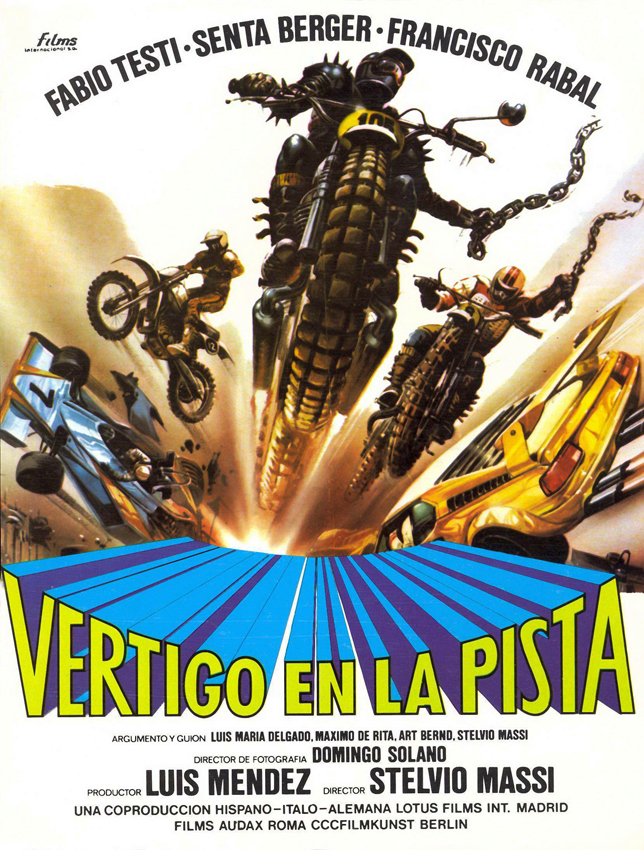
“Speed Driver (Seq. 14)” – Stelvio Cipriani
My novel as a whole is deeply influenced by works of art that refashion other works of art to their purpose, and the final scene is no exception. Without giving too much away, it’s inspired by a scene in Lawrence of Arabia, but more specifically the way that scene was repurposed and set to Shirley Bassey’s “Goldfinger” for an old TCM promo back in the 90s. I didn’t listen to Shirley Bassey while writing the last scene (maybe I should’ve!), but I did listen to the great Italian composer Stelvio Cipriani’s riff on Strauss’s “Also Sprach Zarathustra,” from the soundtrack to Speed Driver. (For the love of god, just look at that poster.)
“Prologue” & “Twilight” – Electric Light Orchestra
“It’s either real or it’s a dream / there’s nothing that is in between.” The robotic voice and sweeping synths of “Prologue” set the table for the explosive, jumpy stunner “Twilight” (and the amazing ELO concept album to follow). These tracks, used famously to score the opening animation for Daicon IV, a hugely important event in the history of anime, always got me in the mood to write about West Florida, and I can’t think of a better way to close out a novel that takes place “just on the border of [the] waking mind.”